Book Categories:

What Is Heat Tracing?
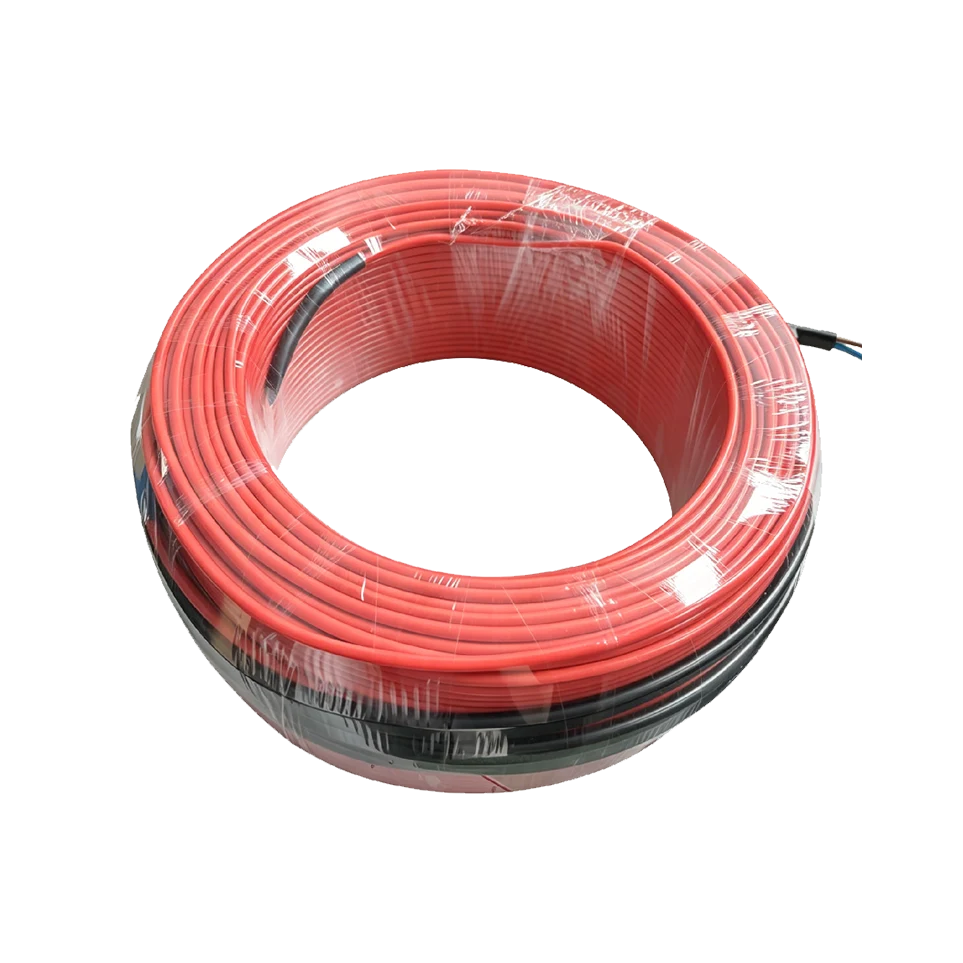
Heat tracing is an electric heating method used to maintain or increase the temperature of pipes, vessels, tanks, roofs, floors, and other surfaces. A heat trace system typically uses an electric heating cable or another resistance heating element to replace heat lost to the surrounding environment.
So, what is heat tracing really designed to do?
In many installations, the goal is not to make an object hot. Instead, heat tracing supplies just enough heat to keep a pipe from freezing, maintain the temperature of a process line, prevent ice from forming on a roof, or keep an outdoor surface clear of snow.
Electric heat tracing is widely used in residential, commercial, and industrial environments. Common applications include pipe freeze protection, temperature maintenance, roof and gutter deicing, snow melting, and electric underfloor heating.
The basic principle is straightforward, but selecting the right cable, power output, control method, insulation, and installation arrangement is critical to system performance.
For more information about available products, see our heat trace cable and electric heating products.
What Does Heat Tracing Do?
Heat tracing compensates for heat loss.
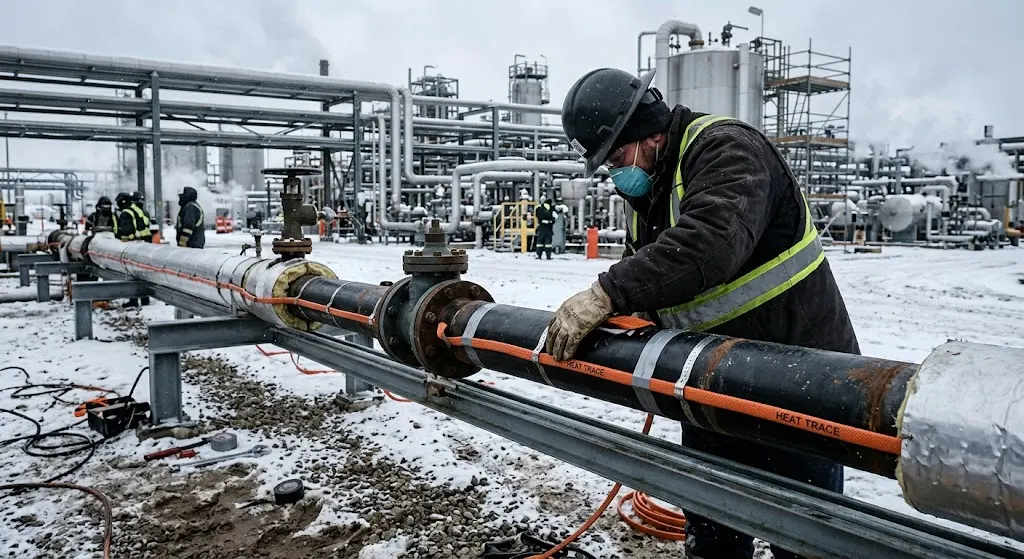
Consider a water pipe installed outdoors during winter. The water inside the pipe naturally loses heat to the cold surroundings. Thermal insulation slows this heat loss, but insulation does not generate heat. When the surrounding temperature falls far enough, the pipe can eventually freeze.
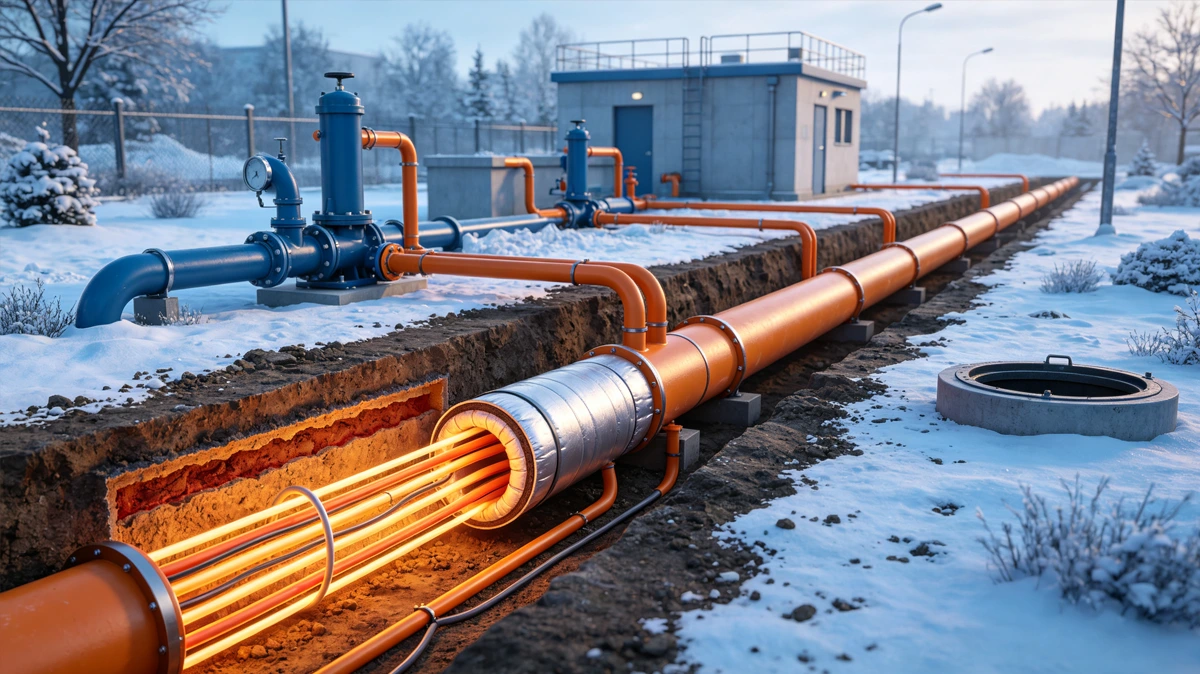
A heat trace cable installed along the pipe adds controlled electrical heat. The cable operates when needed and supplies heat that offsets the heat escaping through the insulation.
This is why heat tracing is commonly used for:
- Freeze protection of water and process pipes
- Temperature maintenance of fluids
- Protection of fire sprinkler piping
- Roof and gutter deicing
- Snow and ice melting
- Electric underfloor heating
- Industrial process heating
The IEC/IEEE 62395 series specifically covers electrical resistance trace heating systems for industrial and commercial applications, including system design, installation, maintenance, and testing.
How Does Heat Tracing Work?
The operating principle is based on electrical resistance.
When electrical current passes through a resistive heating element, electrical energy is converted into heat. The heating cable then transfers that heat to the pipe, surface, or surrounding material.
A basic electric heat tracing system may contain:
- Heating cable
- Power connection
- End termination
- Electrical protection
- Temperature control
- Thermal insulation where required
- Mounting and installation accessories
The heating cable is installed on or around the surface that needs protection. The system is then connected to a suitable electrical supply and, depending on the application, controlled by a thermostat, sensor, controller, or automatic switching device.
For industrial installations, the design process normally considers the required maintenance temperature, minimum ambient temperature, pipe or equipment dimensions, thermal insulation, heat loss, cable output, and operating conditions.
That is why heat tracing should not be treated as simply “put a heating cable on a pipe and connect the power.”
What Is the Difference Between Heat Tracing and Trace Heating?
You may see both terms used in technical documents and product literature.
Heat tracing and trace heating generally describe the same basic technology: an electrical heating system installed along a pipe, surface, or piece of equipment to maintain temperature or prevent freezing.
“Heat tracing” is particularly common in North American technical and industrial terminology, while “trace heating” is also widely used in international standards and engineering documentation.
The purpose remains the same: controlled electrical heating compensates for heat loss or provides the heat required for a specific application.
For engineering projects, it is therefore normal to encounter terms such as electric heat tracing, electrical heat tracing systems, heat trace cables, trace heating cables, and trace heating systems.
What Types of Heat Trace Cable Are Available?
Not every application needs the same heating cable.
UF Thermal supplies both self-regulating and constant wattage heating cables because different installations require different operating characteristics.
Self-Regulating Heating Cable
A self-regulating heating cable changes its power output according to the surrounding temperature.
As the temperature falls, the cable produces more heat. As the temperature rises, its output decreases. This makes self-regulating cable particularly useful where pipe temperatures or environmental conditions vary along the heating circuit.
The technology is based on a conductive polymer heating core. UF Thermal’s self-regulating product range includes UFD low-temperature, UFM medium-temperature, UFH high-temperature, and PASR pre-assembled self-regulating heating cables.
Self-regulating heat tracing is often selected for:
- Water pipe freeze protection
- Process pipe temperature maintenance
- Fire sprinkler protection
- Tanks and valves
- Roofs and gutters
- Other applications where operating conditions vary
See our self-regulating heating cable range for more details.
Constant Wattage Heating Cable
Constant wattage heating cable provides a fixed heat output per unit length when energized.
Unlike self-regulating cable, it does not automatically change its power output in response to local temperature. This makes it useful for applications that require a predictable and uniform heat output across a defined circuit.
UF Thermal offers several constant wattage designs, including series and parallel heating cables, double-conductor and single-conductor underfloor heating cables, and mineral insulated heating cable.
Constant wattage heating cables are commonly considered for:
- Electric underfloor heating
- Outdoor snow melting
- Fixed-temperature applications
- Industrial heating
- Large or engineered heat tracing circuits
Read our guide to self-regulating vs constant wattage heating cable when comparing the two technologies for a specific project.
Where Is Electric Heat Tracing Used?
Heat tracing is much broader than pipe freeze protection.
The same basic technology can solve very different heating problems, depending on the cable type, design, and control system.
Pipe Freeze Protection
Pipe freeze protection is one of the most common applications.
Water and other liquids can freeze when exposed to low ambient temperatures. A properly designed heat trace system helps maintain the pipe above its required minimum temperature.
Applications include water lines, fire protection piping, outdoor piping, valves, flanges, and selected process lines.
Our pipe freeze protection solution page provides more information about using heating cable on pipes and related equipment.
For water-filled piping, freeze protection is particularly important because a frozen pipe can cause service interruptions, cracking, or equipment damage. Electrical heat tracing is one recognized method of maintaining protection when combined with appropriate insulation and control.
Roof and Gutter Deicing
Why install heating cable on a roof?
The main objective is to reduce the formation of ice dams and maintain drainage paths through gutters and downspouts.
Electric heating cable can be installed in selected roof edges, gutters, valleys, and drainage areas where snow and ice accumulation is a concern.
The appropriate system depends on roof construction, climate, cable layout, available power, and required control strategy.
See our roof and gutter deicing solutions for more information.
The vocabulary used in this application also includes gutter heaters, gutter heat tape, roof heat cable, roof deicing cable, heated gutters, and roof and gutter heating systems.
Snow Melting Systems
Heat tracing can also be embedded beneath outdoor surfaces to melt snow and ice.
Typical applications include:
- Driveways
- Sidewalks
- Steps
- Ramps
- Loading areas
- Other exposed pavement
UF Thermal offers both snow-melting cable and snow-melting mats for outdoor deicing applications.
For fixed outdoor electric deicing and snow-melting equipment, the NEC includes requirements covering equipment installed in areas such as driveways, walks, steps, drainage systems, roofs, and other structures.
Electric Underfloor Heating
Heat tracing is not limited to industrial piping.
Electric floor heating uses resistive heating cables or mats installed beneath a finished floor. Instead of protecting a pipe from freezing, the system provides comfort heating by transferring heat upward through the floor structure.
UF Thermal’s product range includes underfloor heating cables, fiberglass mesh heating mats, aluminum foil mats, and floor heating thermostats.
Learn more about our electric underfloor heating systems.
Does Heat Tracing Need a Thermostat?
Not always.
A thermostat or controller is used when the system needs automatic temperature management. In a simple freeze protection application, a self-regulating cable may be selected because its output naturally changes with temperature.
However, automatic control can still be beneficial. It can reduce unnecessary operating time, provide more precise temperature management, and coordinate the heating system with sensors or process requirements.
UF Thermal offers mechanical, button, wireless, touchscreen, and WiFi thermostats for electric heating applications.
For commercial and industrial systems, the control method should be selected as part of the overall heat tracing design rather than treated as an afterthought.
Why Is Thermal Insulation Important?
Heating cable and insulation work together.
The purpose of a heat trace system is to replace heat lost from the pipe or equipment. Better insulation reduces heat loss, which can reduce the amount of heating power required to maintain the target temperature.
Without suitable insulation, a system may consume more energy while struggling to maintain the desired temperature.
This is particularly important for pipe freeze protection and industrial temperature maintenance. The heat loss calculation should account for pipe dimensions, insulation thickness and material, ambient conditions, wind exposure where applicable, process temperature, and required safety margin.
In practical terms, the heating cable provides the heat; insulation helps keep that heat where it is needed.
How Do You Choose the Right Heat Trace Cable?
Choosing a heat trace cable starts with the application, not the cable name.
For a pipe freeze protection project, engineers normally need to consider the minimum ambient temperature, pipe size, pipe material, fluid, desired maintenance temperature, insulation, cable output, voltage, circuit length, and control requirements.
For an industrial temperature maintenance project, process conditions become even more important.
The cable should also be suitable for the environmental conditions, including moisture, UV exposure, chemical exposure, mechanical conditions, and, where applicable, hazardous locations.
A practical selection process usually looks at five questions:
What temperature must be maintained?
The target maintenance temperature determines how much heat the system must provide.
How much heat will the system lose?
Heat loss depends on the pipe or surface, insulation, surrounding environment, and operating conditions.
Which cable type is appropriate?
Self-regulating cable is often chosen for variable-temperature conditions, while constant wattage cable can be suitable where a fixed heat output is preferred.
How will the system be controlled?
Depending on the application, the system may use a thermostat, ambient sensor, pipe temperature sensor, controller, or another control strategy.
How will the cable be installed?
Spacing, attachment, power connections, terminations, bends, overlaps, junctions, and insulation all affect the final system.
For larger projects, a formal heat tracing design should be completed before installation. IEC/IEEE 62395-2:2024 provides guidance for system design, installation, maintenance, and repair of electrical resistance trace heating systems in industrial and commercial applications.
Is Heat Tracing Energy Efficient?
Heat tracing can be energy efficient when it is correctly designed and controlled.
The purpose is not to operate a heater continuously at maximum output. A properly designed system supplies the heat needed to compensate for heat loss or maintain the required temperature.
Self-regulating heating cables can reduce output as temperatures rise, while thermostats and controllers can switch heating circuits according to operating conditions.
However, energy efficiency depends on the complete system. Cable selection, insulation, control settings, installation quality, and operating conditions all matter.
For this reason, comparing heating cables only by wattage can give a misleading picture of actual energy performance.
Heat Tracing Is a System, Not Just a Cable
One of the most important points for buyers and project engineers is that a heat trace cable is only one component of the installation.
A reliable system may include the heating cable, power supply, connection and termination components, temperature controls, thermal insulation, sensors, electrical protection, and installation accessories.
For example, UF Thermal provides heat trace installation accessories including power junction boxes, splice junction boxes, and tail-end junction boxes.
This system-level approach becomes particularly important for commercial and industrial applications where reliability, maintainability, and documented installation practices matter.
What Standards Apply to Heat Tracing?
The applicable standard depends on the application and installation environment.
IEC/IEEE 62395-1:2024 specifies general and testing requirements for electrical resistance trace heating systems used in industrial and commercial applications. IEC/IEEE 62395-2:2024 addresses system design, installation, maintenance, and repair.
For low-temperature heating cables used for comfort heating and prevention of ice formation, IEC 60800:2021 applies to relevant resistive heating cables and includes applications such as surface heating, snow melting, and frost protection of roofs, gutters, and pipes.
Local electrical codes and project specifications also need to be considered. The standard selected for a project should always match the actual application, location, and equipment classification.
Heat Tracing vs. Traditional Heating Methods
Heat tracing has one major advantage: it places heat close to the point where heat is being lost or where heating is required.
For example, heating an entire room simply to keep one outdoor pipe from freezing would be inefficient. A heat trace system applies heat directly to the pipe.
Likewise, a roof deicing cable focuses heat on drainage areas rather than attempting to warm the entire roof structure.
This localized approach makes electric heat tracing useful for targeted temperature maintenance and freeze protection.
Frequently Asked Questions About Heat Tracing
What is heat trace used for?
Heat trace is used to prevent freezing, maintain process temperatures, melt snow and ice, deice roofs and gutters, and provide electric floor heating.
What is the difference between heat trace and heat tracing?
There is little practical difference in general usage. “Heat trace” often refers to the cable or system, while “heat tracing” commonly describes the overall heating method or application.
How does heat trace work?
An electrical heating element converts electrical energy into heat. The heat is transferred to a pipe, surface, floor, roof, or other equipment to maintain a required temperature.
Is self-regulating heat tracing better than constant wattage?
Neither type is universally better. Self-regulating cable is useful for changing thermal conditions, while constant wattage cable can provide predictable fixed output. The correct choice depends on the application and design requirements.
Can heat tracing prevent pipes from freezing?
Yes. Properly designed heat tracing can provide freeze protection for water pipes and other piping systems when the cable, insulation, control, and installation are correctly matched to the operating conditions.
Final Thoughts
So, what is heat tracing?
At its core, it is a controlled electrical heating method that keeps a surface or process above a required temperature.
The technology itself is simple. The engineering behind a reliable system is not.
The right heating cable must match the application. Heat loss must be considered. Insulation and controls need to work with the cable rather than independently from it. Installation must also follow the applicable product instructions, electrical requirements, and project standards.
For suppliers, contractors, and engineering teams, the best approach is to treat heat tracing as a complete system rather than a standalone cable purchase.
UF Thermal provides self-regulating heating cables, constant wattage heating cables, heating mats, thermostats, and installation accessories for residential, commercial, and industrial heating applications. Explore our heat tracing products or contact UF Thermal for help selecting a suitable heating solution for your project.