Book Categories:

Self-Regulating vs Constant Wattage Heating Cable: Temperature Control Comparison
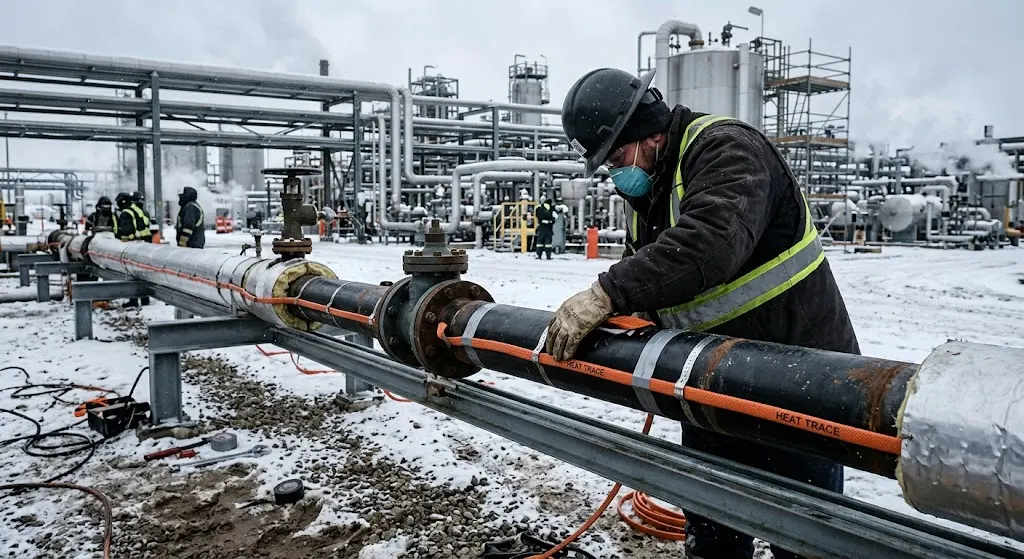
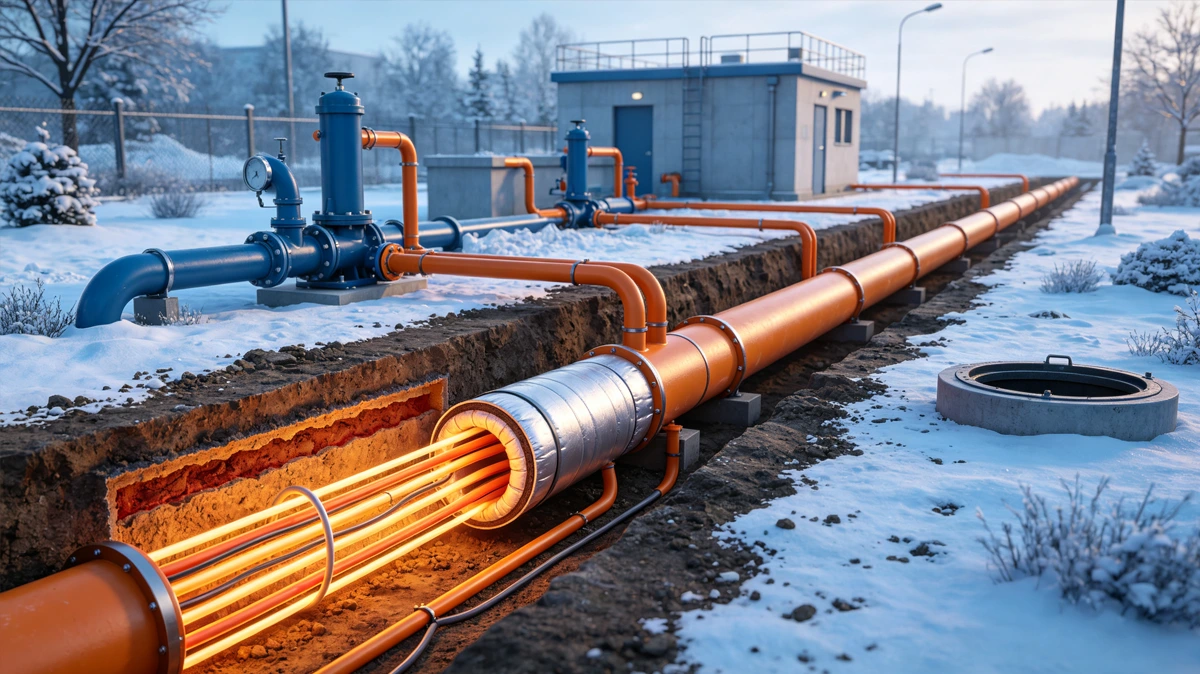
Self-regulating heating cable and constant wattage heating cable both provide electric heat for pipe freeze protection and temperature maintenance, but they control heat in different ways. Self-regulating cable changes its local heat output as temperature changes, while constant wattage cable provides a defined output per unit length. The correct choice depends on the application, pipe design, insulation, ambient temperature, control strategy, and installation requirements.
Quick answer: Self-regulating heating cable is often considered for variable ambient conditions, complex pipe layouts, and applications where local heat output should respond to temperature changes. Constant wattage heating cable may suit predictable, defined conditions where the required output and circuit design are clearly established. Neither cable type should be selected by name alone.
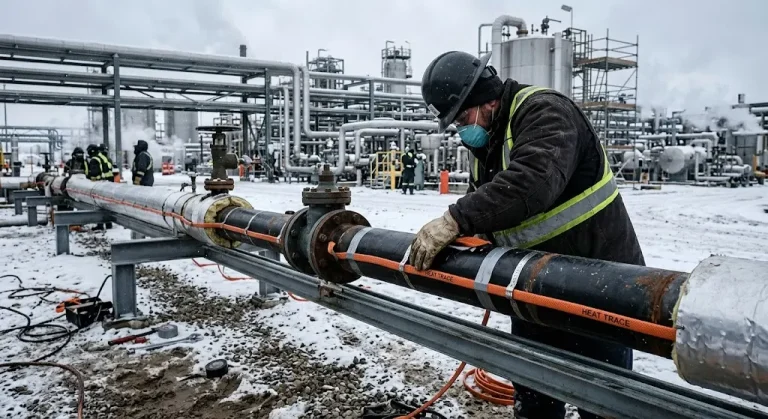
Both products are widely used in electric heat tracing systems. They can protect water lines, maintain process temperatures, prevent freezing around valves and equipment, or support roof and gutter de-icing. However, “self-regulating” does not mean that the cable maintains an exact pipe temperature by itself, and “constant wattage” does not mean that the system is unsuitable for professional projects. Each technology has a different operating profile and must be matched to the heat-loss conditions.
For a broader overview of cable types and system planning, see the heat trace system design guide.
What Is Self-Regulating Heating Cable?
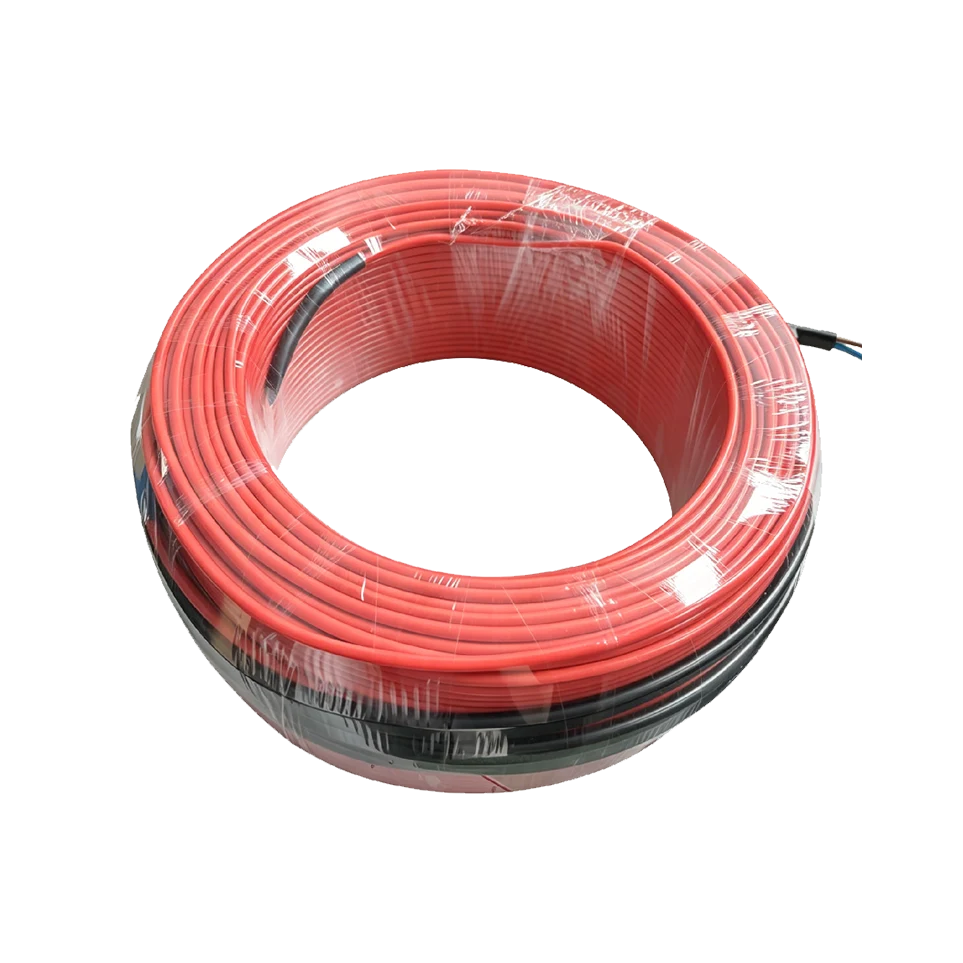
Self-regulating heating cable uses a conductive core whose electrical resistance changes in response to temperature. When the surrounding area becomes colder, the cable can produce more heat within its design range. When the area becomes warmer, its heat output decreases. This behavior occurs along the cable, so different sections can respond to different local temperatures.
This makes self-regulating heat trace useful where heat loss is not uniform. For example, a pipe may pass through an indoor room, an exterior wall, and an exposed loading area. Each section can experience different temperatures and airflow. A self-regulating cable can respond locally instead of delivering exactly the same output at every point.
Self-regulating cable still requires correct sizing, suitable insulation, circuit protection, connection accessories, and a control strategy where required. Its output adjustment is not the same as precise closed-loop temperature control. A thermostat or controller may still be needed to switch the system, monitor conditions, manage energy use, or satisfy project requirements.
What Is Constant Wattage Heating Cable?
Constant wattage heating cable is designed to provide a defined heat output per unit length when operated at its rated voltage and installation conditions. The output is generally predictable along the heated circuit, which can simplify design calculations for applications with stable and well-understood heat-loss conditions.
Constant wattage cable can be used for pipe freeze protection, temperature maintenance, floor heating, snow melting, and other electric heating applications when the product is approved for that use. Because the cable does not automatically reduce output in warmer sections, the system design must account for operating temperature, insulation, spacing, controls, and the permitted installation method.
Constant wattage systems may be a practical choice when the heated area is consistent, the cable route is clearly defined, and the required output has been calculated. Overlapping, crossing, shortening, or modifying the cable may be restricted, so installers should follow the specific product instructions.
Self-Regulating vs Constant Wattage Heating Cable: Comparison Table
| Comparison factor | Self-regulating heating cable | Constant wattage heating cable |
|---|---|---|
| Heat output | Changes locally as temperature conditions change within the design range. | Provides a defined output per unit length at rated operating conditions. |
| Variable ambient conditions | Often considered for changing temperatures and uneven heat loss. | Requires design and control suitable for the expected operating range. |
| Complex pipe layouts | Can be useful where branches, fittings, and exposed sections have different conditions. | Works when routing, spacing, circuit length, and heat loss are clearly calculated. |
| Energy management | May reduce local output as surrounding temperatures rise. | Usually relies more directly on controls, scheduling, and correct system sizing. |
| Design requirements | Still requires cable limits, maximum circuit length, inrush considerations, and approved accessories to be checked. | Requires accurate output, spacing, temperature, circuit, and installation calculations. |
| Typical control approach | May use ambient sensing, pipe sensing, switching, monitoring, or a combination. | Often uses thermostatic or scheduled control to limit operation. |
How Does Temperature Control Differ Between the Two Cable Types?
Self-regulating cable responds to local temperature
The primary temperature-control advantage of self-regulating cable is that different sections can change their heat output according to local conditions. A colder section may produce more heat, while a warmer section may reduce its output. This can be valuable on pipework exposed to wind, changing weather, or different insulation conditions.
The cable does not measure temperature in the same way as a sensor-controlled system. It does not automatically guarantee a specific pipe temperature, and it cannot correct for an undersized design, missing insulation, incorrect voltage, or poor installation. A complete system may still require a thermostat, sensor, controller, or alarm.
Constant wattage cable provides predictable output
Constant wattage cable provides a more uniform designed output along the circuit. This predictability can make it suitable for applications where the pipe size, insulation, ambient temperature, and required maintenance temperature remain relatively stable.
Because output does not automatically adjust to local temperature, the system must be designed with suitable controls and thermal protection. The design should also account for the cable’s maximum operating temperature and any restrictions on cable spacing, overlap, or contact.
Cable Selection Checklist for Freeze Protection and Temperature Maintenance
The correct cable should be selected from the application data, not from the cable name or a general assumption about energy efficiency. Prepare the following information before requesting a technical recommendation:
- Pipe material, outside diameter, total length, and route layout
- Lowest expected ambient temperature and exposure to wind or moisture
- Required freeze-protection or maintained process temperature
- Insulation type, thickness, condition, and weatherproofing
- Available voltage and electrical distribution details
- Valves, flanges, pumps, meters, supports, branches, and other heat-loss points
- Required control method, monitoring, alarms, or operating schedule
- Indoor, outdoor, wet, corrosive, classified, or mechanically exposed conditions
- Maximum circuit length, connection kits, end seals, and termination requirements
Pipe freeze protection
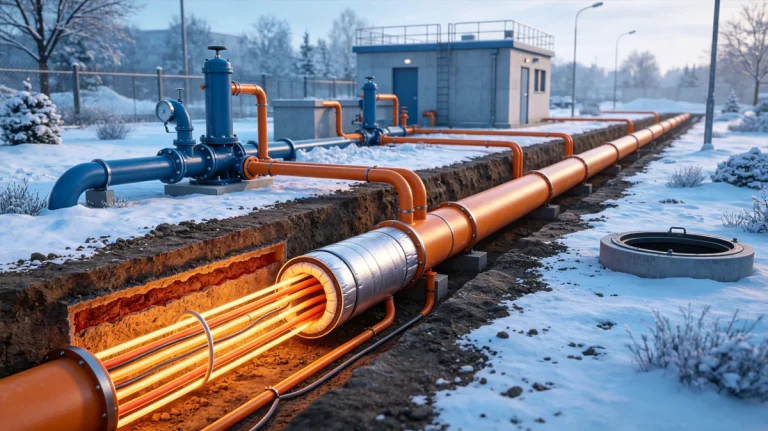
For water pipes in cold or unheated locations, self-regulating cable is often considered when ambient conditions vary across the pipe route. Constant wattage cable can also be suitable when the heat-loss calculation and control method are clearly established.
For application-specific guidance, see the pipe freeze protection solutions page.
Process temperature maintenance
Process temperature maintenance usually requires more detailed information than basic freeze protection. The process fluid, target temperature, maximum exposure temperature, insulation system, operating cycle, and consequences of temperature loss should all be reviewed.
A constant wattage system may be appropriate for a stable, engineered process condition. Self-regulating cable may be considered where the pipe route has changing heat loss, but the cable’s temperature limits and output characteristics must be confirmed before selection.
Insulation, Thermostats and Controls: System Design Comparison
Heating cable cannot compensate indefinitely for poor insulation. Insulation reduces heat loss, while the cable replaces heat lost to the surrounding environment. A damaged, wet, compressed, or incomplete insulation system can increase the required output and reduce operating efficiency.
Thermostats and controllers provide another layer of temperature management. They can switch the circuit based on ambient or pipe temperature, reduce unnecessary operating time, and provide monitoring or alarm functions in commercial and industrial systems.
Self-regulating cable may be more tolerant of changing local conditions, but it still benefits from suitable controls. Constant wattage cable generally depends more directly on correct control settings and operating schedules. For control selection, review the heat trace thermostat and controller options.
Installation and Commissioning Checklist
Both cable types must be installed according to the manufacturer’s instructions, pipe manufacturer requirements, and applicable electrical codes. Qualified personnel should complete electrical connections, grounding, protective devices, testing, and commissioning where required.
- Confirm the cable type, voltage, output, and approved application.
- Inspect the pipe, fittings, insulation, and cable route before installation.
- Follow the specified fastening method and minimum bend radius.
- Check all restrictions on overlap, crossing, spacing, cutting, and termination.
- Install approved power connections, splice kits, tee connections, and end seals.
- Test and document the circuit before insulation is installed.
- Install compatible insulation and weather protection without damaging the cable.
- Commission the controller and record the final inspection results.
Self-regulating cable is not automatically safe to overlap, and constant wattage cable is not automatically safe to modify. Product-specific instructions always take priority over general industry terminology.
Frequently Asked Questions
Is self-regulating heating cable better than constant wattage cable?
Neither type is universally better. Self-regulating cable may suit variable ambient conditions and complex layouts, while constant wattage cable may suit predictable conditions with a clearly calculated output. The correct choice depends on the complete system design.
Does self-regulating heat trace need a thermostat?
It may. Self-regulating output changes with local temperature, but a thermostat or controller can still improve energy management, monitoring, switching, and system protection. Follow the product documentation and project requirements.
Can constant wattage heating cable be used for pipe freeze protection?
Yes, when the cable is approved for the application and correctly selected for pipe size, insulation, ambient temperature, voltage, and required protection level. Controls and installation restrictions must also be reviewed.
Which cable is more energy efficient?
Energy use depends on cable output, operating hours, insulation, controls, ambient conditions, and system sizing. Self-regulating cable may reduce local output as temperatures rise, but it is not automatically more efficient in every installation.
Can these cables be used on PEX or PVC pipes?
Some products are approved for compatible plastic pipe applications, but the answer depends on the specific cable and pipe material. Confirm compatibility with both manufacturers before installation. Do not transfer installation rules from metal pipe to PEX, PVC, or HDPE.
Need Help Selecting the Right Heating Cable?
Share your pipe material, dimensions, minimum ambient temperature, insulation details, required temperature, voltage, and control requirements. UF Heat can help you compare self-regulating and constant wattage heating cable options for your project. Request a Heating Cable Recommendation