Book Categories:

Heat Tape for Pipes: Selection, Installation and Freeze Protection Guide
Heat tape for pipes is an electric freeze-protection solution that helps maintain pipe temperature when insulation alone cannot prevent freezing. Choosing the right system depends on pipe material, pipe size, exposed length, lowest ambient temperature, insulation, available voltage, and the control method used.
This guide explains how pipe heating cable works, when it is needed, how to compare common options, and what information a contractor, distributor, or facility manager should prepare before selecting a system.
Table of contents
- What Is Heat Tape for Pipes?
- Heat Tape, Pipe Heating Cable and Heat Trace: Key Differences
- Which Pipes and Climate Conditions Need Freeze Protection?
- A Selection Checklist for Cable Type, Voltage and Control
- Installation, Inspection and Replacement Essentials
- When Should You Request a Project-Specific Recommendation?
- Frequently Asked Questions About Heat Tape for Pipes
What Is Heat Tape for Pipes?
Heat tape for pipes is a commonly used name for electrical cable installed along a pipe to reduce the risk of freezing. Depending on the product and application, it may also be called pipe heating cable, heat cable, freeze-protection cable, or heat trace cable.
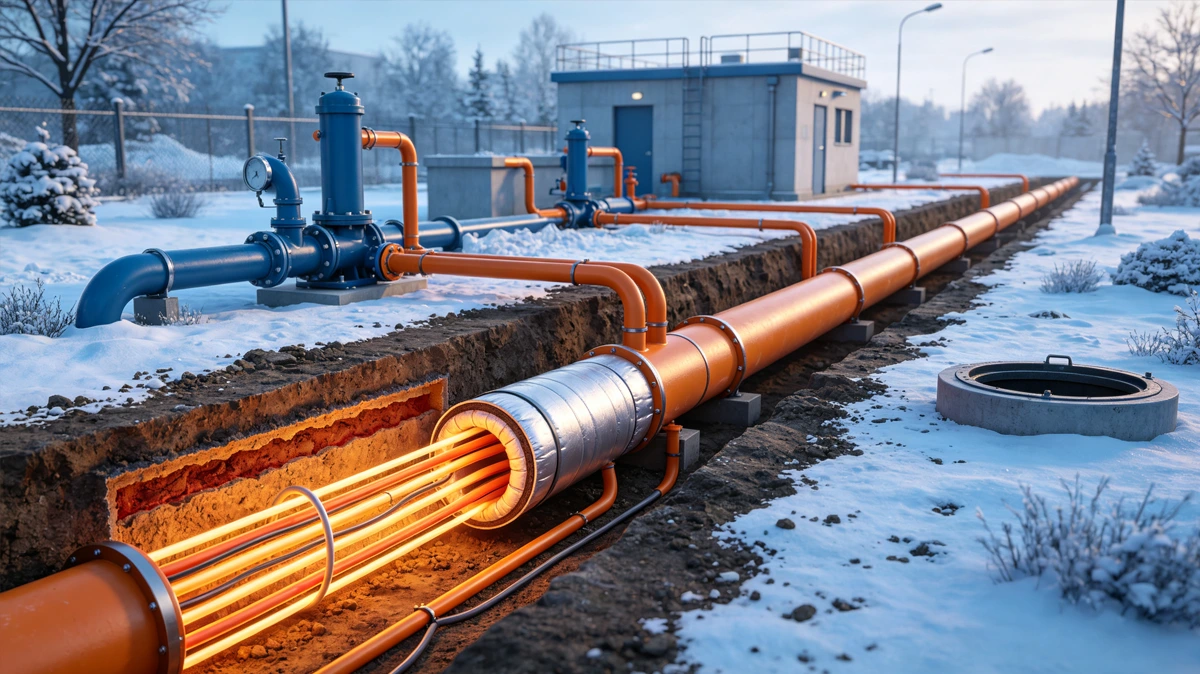
The cable produces controlled heat along the pipe run. When it is selected and installed correctly, it helps offset heat loss from water pipes, drain lines, fire protection piping, process lines, and other vulnerable pipework. Pipe insulation is normally installed over the cable and pipe to reduce heat loss and improve energy efficiency.
For straightforward freeze-protection applications, the goal is usually not to make the pipe hot. The goal is to keep the pipe temperature above the point where the contained liquid could freeze, while using a suitable control strategy to avoid unnecessary power consumption.
Heat tape should be treated as part of a complete system, not as a stand-alone product. The system may include:
- Heating cable sized for the pipe and environment
- A thermostat, ambient sensor, or controller
- Power connection and protection components
- Compatible thermal insulation and weather protection
- Labels, inspection records, and maintenance procedures
For product options, explore Heating Cable. For applications specifically focused on preventing frozen plumbing, See Pipe Freeze Protection Solutions.
Heat Tape, Pipe Heating Cable and Heat Trace: Key Differences
The terms heat tape, pipe heating cable, and heat trace are often used interchangeably. In practice, they can describe different product categories, performance levels, and project requirements.
| Term | Typical Meaning | Common Use | Selection Consideration |
|---|---|---|---|
| Heat tape | A broad market term for cable used to protect pipes from freezing | Residential, light commercial, and basic pipe protection | Check whether the product is suitable for the pipe material, location, insulation, and power supply |
| Pipe heating cable | A more specific description of cable installed on pipework | Water pipes, drain lines, valves, and small process lines | Select based on pipe dimensions, heat loss, voltage, and required temperature maintenance |
| Industrial heat trace | An engineered heating system for process or critical infrastructure | Industrial plants, hazardous areas where applicable, long pipe runs, tanks, and process temperature maintenance | Requires a more detailed design review, controls, accessories, and project documentation |
The most important distinction is not the name used in a search query. It is whether the cable is designed for the operating condition.
A simple exposed water pipe in a cold area may only need freeze protection. A chemical process line, a firewater network, or an outdoor line with long runs may require a more engineered heat-tracing design. Applying a basic residential product to an industrial operating condition can create performance, reliability, and safety risks.
Self-regulating heating cable is often considered where ambient conditions vary, where pipe lengths are complex, or where energy management matters. Its output changes in response to local temperature conditions, but the final selection should still be based on the manufacturer’s design guidance and the overall system.
Compare Self-Regulating Heating Cables
Which Pipes and Climate Conditions Need Freeze Protection?
Pipes are most vulnerable to freezing when they are exposed to low ambient temperatures, wind, moisture, poor insulation, or interrupted building heat. Risk is not limited to outdoor plumbing. Pipes in crawl spaces, attics, loading areas, parking structures, unheated warehouses, and exterior wall cavities can also be exposed to damaging cold conditions.
Freeze protection should be considered when one or more of the following conditions apply:
- The pipe is located outdoors or in an unheated area.
- The pipe carries water or another liquid that can freeze at the expected temperature.
- The building may be vacant, intermittently heated, or subject to power-management shutdowns.
- The pipe passes through a draft-prone area, such as a loading bay or open structure.
- Insulation is damaged, thin, wet, missing, or difficult to maintain.
- The pipe includes valves, elbows, tees, meters, pumps, or other components with greater heat loss.
- A frozen line would interrupt operations, damage property, create a safety issue, or cause costly downtime.
Does pipe material affect the heat-tape decision?
Yes. Pipe material affects how heat is transferred, where cable can be placed, and what installation restrictions may apply. Metal, copper, steel, CPVC, PVC, PEX, and composite pipes can have different manufacturer requirements.
Do not assume a cable suitable for one material is automatically suitable for another. Before installation, confirm:
- The pipe manufacturer permits the intended freeze-protection method.
- The heating cable manufacturer lists the pipe material as compatible.
- The insulation is rated for the operating condition.
- The fastening method will not damage the pipe or cable.
- The cable installation instructions address any restrictions on overlap, crossings, bends, or fittings.
Insulation reduces heat loss but does not always replace heat tape
Pipe insulation is essential, but insulation does not generate heat. It slows heat loss and can extend the time before a pipe freezes. In long cold periods, exposed locations, or critical applications, insulation alone may not provide enough protection.
The practical approach is usually to assess insulation and heat tracing together. Good insulation can reduce the cable output required and improve operating efficiency. Damaged or wet insulation can undermine an otherwise well-designed heating system.
A Selection Checklist for Cable Type, Voltage and Control
Selecting heat tape for pipes should begin with the actual operating conditions, not just the cable length. A cable that is too small may fail to maintain protection in severe weather. A cable that is incorrectly controlled may consume unnecessary energy or operate outside its intended design.
Use this checklist before requesting a quotation or product recommendation.
1. Define the freeze-protection objective
Clarify whether the system only needs to prevent freezing or whether it must maintain a higher process temperature. These are different design tasks.
For basic water-pipe protection, document the lowest expected ambient temperature and the desired minimum pipe temperature. For process lines, identify the process fluid, required maintained temperature, operating hours, and consequences of temperature loss.
2. Record the pipe details
Collect the pipe material, outside diameter, total heated length, and layout. Also identify valves, flanges, elbows, tees, meters, pumps, and pipe supports that may need additional design attention.
A pipe with the same diameter can have very different heat loss depending on whether it is indoors, exposed to wind, buried, elevated, insulated, or connected to large metal components.
3. Select the appropriate cable category
Common choices include constant-wattage cable, self-regulating heating cable, and engineered heat-tracing systems. The correct choice depends on the application, cable routing, required temperature, installation environment, and control method.
| Selection Question | Why It Matters |
|---|---|
| Is the pipe exposed to changing outdoor temperatures? | Variable ambient conditions may affect cable and control selection |
| Does the line need freeze protection or process temperature maintenance? | Freeze protection and temperature maintenance have different performance requirements |
| Is the pipe short and simple or long with multiple branches and fittings? | Complex geometry may require more detailed design and accessory planning |
| Is energy consumption a priority? | Cable type, insulation, and controls all affect operating cost |
| Is the installation in a regulated or classified area? | Project-specific compliance, approvals, and design review may be required |
4. Confirm power supply and controls
Cable voltage must match the available power supply. The project should also define how the system will turn on and off, such as through an ambient-sensing thermostat, a pipe-sensing controller, or a more advanced control panel.
A controller does more than switch power. It helps align operation with weather conditions, pipe temperature, energy goals, and maintenance visibility. In commercial and industrial installations, controls can also support alarms, monitoring, and operating records.
View Heat Trace Thermostats to evaluate control options.
5. Plan insulation and weather protection
Specify the insulation type, thickness, and condition. Outdoor systems may also need weatherproof cladding or protective jacketing. All system components must be appropriate for the installation environment.
Do not conceal cable defects beneath insulation. Inspect the cable, accessories, and connections before insulation is installed and again as part of routine maintenance.
Installation, Inspection and Replacement Essentials
Heat tape for pipes should be installed in accordance with the cable manufacturer’s instructions, the pipe manufacturer’s requirements, and applicable local electrical codes. Electrical connections, grounding, protective devices, and commissioning should be handled by qualified personnel where required.
A professional installation process normally includes the following stages:
- Inspect the pipe and installation area.
Confirm that the pipe is in sound condition, identify damaged insulation, locate fittings, and remove conditions that could damage the cable. - Verify cable compatibility and routing.
Check the product instructions for permitted pipe materials, cable spacing, bend radius, fastening methods, overlap restrictions, and the treatment of valves or fittings. - Install controls and protective components.
Confirm that the power supply, controller, circuit protection, and connection accessories match the selected system. - Inspect before insulating.
Examine cable routing, terminations, labels, and accessories before they are covered. Record the installation where project procedures require it. - Apply compatible insulation and weather protection.
Insulation should fit properly without crushing or damaging the cable. Exterior systems should be protected from moisture and physical damage as required. - Test and commission the system.
Use the manufacturer’s required test procedures and keep the results with the project documentation.
When should heat tape be inspected or replaced?
Inspect heat tape before cold weather, after building work near the pipe, and whenever there is evidence of water damage, insulation damage, tripped protection devices, abnormal operating behavior, or loss of freeze protection.
Replacement may be necessary when the cable jacket is damaged, connection components show deterioration, the product is beyond the manufacturer’s stated service guidance, or testing identifies a fault. Do not repair or modify a cable unless the manufacturer specifically provides an approved method.
When Should You Request a Project-Specific Recommendation?
Request a project-specific recommendation when the application involves long pipe runs, critical water supply, process temperature maintenance, unusual pipe materials, outdoor exposure, complex fittings, controls integration, or any requirement that goes beyond a simple, documented freeze-protection installation.
A complete request helps the supplier recommend the right cable, controls, accessories, and insulation strategy. Include:
- Pipe material and outside diameter
- Total heated pipe length and a simple routing drawing
- Lowest expected ambient temperature
- Required minimum pipe or process temperature
- Fluid carried by the pipe
- Insulation type, thickness, and condition
- Indoor, outdoor, buried, or exposed installation environment
- Available voltage and power details
- Number and type of valves, elbows, flanges, meters, or equipment
- Required control method or monitoring expectations
- Area classification and compliance requirements, where applicable
- Project schedule, quantity, and destination market
Providing these details early reduces redesign, avoids mismatched components, and makes it easier to compare quotations on a like-for-like basis.
Need help matching a cable and control system to your pipework?
Request a Pipe Freeze Protection Recommendati] and provide the pipe details, climate conditions, insulation information, and power supply available for the project.
Frequently Asked Questions About Heat Tape for Pipes
Can heat tape be used on PEX pipes?
Does pipe insulation replace heat tape?
Should heat tape overlap on pipes?
Can heat tape be installed on frozen pipes?
When is self-regulating heat tape the right choice?