Book Categories:

Heat trace design tool
Pipe Heat Loss Calculator
Estimate heat loss from an insulated pipe and convert the result into a preliminary design load and heating cable output for freeze protection or temperature maintenance.
Pipe heat loss
Heat trace design
Imperial / Metric
Preliminary estimate
Heat loss must be offset by the heating cable output
Start your estimate
Calculate Pipe Heat Loss for Heat Trace Design
Enter the design condition for one straight pipe run. Use the coldest expected ambient temperature and the actual insulation thickness.
Enter the pipe condition
This tool estimates steady-state heat loss for a straight, insulated pipe. Fittings and special heat sinks need separate review.
Why use this tool
A Practical Starting Point for Pipe Heat Loss Design
Pipe heat loss depends on temperature difference, pipe size, insulation, wind and fittings. Keep those inputs visible before choosing a heating cable.
Estimate Heat Loss
See the preliminary heat loss per metre or foot and the total loss for the heated pipe length.
Add a Design Margin
Apply a visible safety factor so the early estimate accounts for normal uncertainty in field conditions.
Prepare a Cable Inquiry
Use the design load, output and current as a starting point for a Youfu Thermal product and engineering discussion.
Calculation method
How the Pipe Heat Loss Estimate Works
The calculation is intentionally transparent and should be used as an early-stage engineering aid rather than a final compliance result.
Define the Temperature Difference
The minimum ambient and required maintain temperature establish the design temperature difference for the pipe.
Adjust for Insulation and Exposure
Pipe diameter, material, insulation type, insulation thickness and outdoor exposure are applied as preliminary heat-loss factors.
Translate Loss into Cable Output
The design load is compared with available heating cable output options and voltage to show a preliminary current.
Preliminary calculation logic
heat loss = pipe length x estimated loss per metredesign load = total heat loss x safety factorrunning current = recommended cable output x effective cable length / voltageDesign checklist
What Changes Pipe Heat Loss?
Confirm these conditions before turning a preliminary heat-loss result into a final heat trace design.
| Design input | Why it matters | Project check |
|---|---|---|
| Pipe outside diameter | Larger pipe surfaces generally expose more area to the surrounding environment and may require more heat. | Use the actual outside diameter and pipe schedule. |
| Minimum ambient temperature | The coldest expected condition drives the temperature difference and design heat loss. | Use the local design temperature, not a seasonal average. |
| Insulation thickness and condition | Insulation reduces heat loss, while wet, damaged or incomplete insulation can increase it substantially. | Confirm material, thickness, continuity and weatherproofing. |
| Valves, flanges and supports | Fittings and heat sinks may need extra cable length, dedicated routing or accessories. | Review the complete pipe drawing separately. |
| Pipe contents and maintain temperature | Water freeze protection and process temperature maintenance have different operating objectives. | Confirm the required setpoint and allowable temperature range. |
Explore the system
Match Pipe Heat Loss to the Right Heating Cable
The calculator gives a preliminary direction. Final selection depends on temperature rating, output curve, voltage, controls, environment and installation details.
UFD Low-Temperature Self-Regulating Cable
For lower-temperature pipe freeze protection without steam purging. The output responds to ambient conditions and the cable can be cut to required lengths on site.
- Maximum maintenance temperature: 65°C
- Output options: 10 / 15 / 25 / 30 / 40 W/m
UFM Medium-Temperature Self-Regulating Cable
For freeze protection, condensation prevention and process temperature maintenance on metal or non-metal pipeline systems and equipment.
- Maximum maintenance temperature: 110°C
- Output options: 15 / 30 / 45 / 60 W/m
UFH High-Temperature Self-Regulating Cable
For higher-temperature process maintenance, steam-purged systems and large-diameter pipelines after temperature limits are confirmed.
- Maximum maintenance temperature: 150°C
- Output options: 15 / 30 / 45 / 60 W/m
UFP Parallel Constant Wattage Cable
For stable continuous heat output in pipe freeze protection, temperature maintenance, roof snow melting and industrial insulation.
- Rated voltage: 220 V
- Output options: 10 / 20 / 30 / 40 W/m
UFC Series Constant Wattage Cable
For long-distance pipeline heat tracing, tank insulation and large-area snow melting with stable continuous power.
- Output options: 25 / 40 W/m
- Supply voltage: up to 600 V
MI Mineral Insulated Heating Cable
For demanding high-temperature industrial process heating and extreme environments requiring project-specific engineering review.
- Metal sheath and mineral insulation
- Confirm hazardous-area requirements separately
Applications
Where Pipe Heat Loss Calculations Are Used
Pipe heat-loss estimates support several heat tracing applications, but each project still needs its own cable layout and installation review.
Pipe Freeze Protection
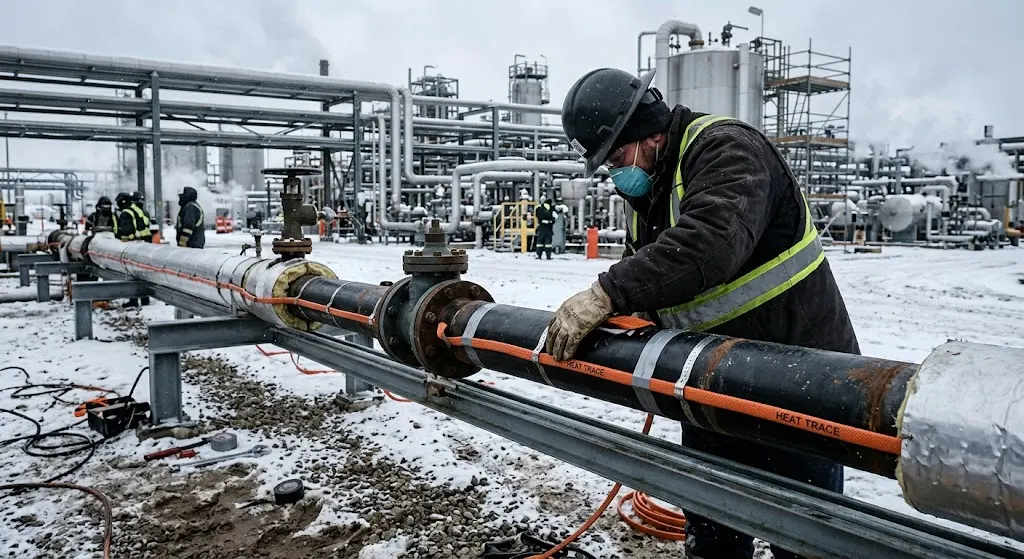
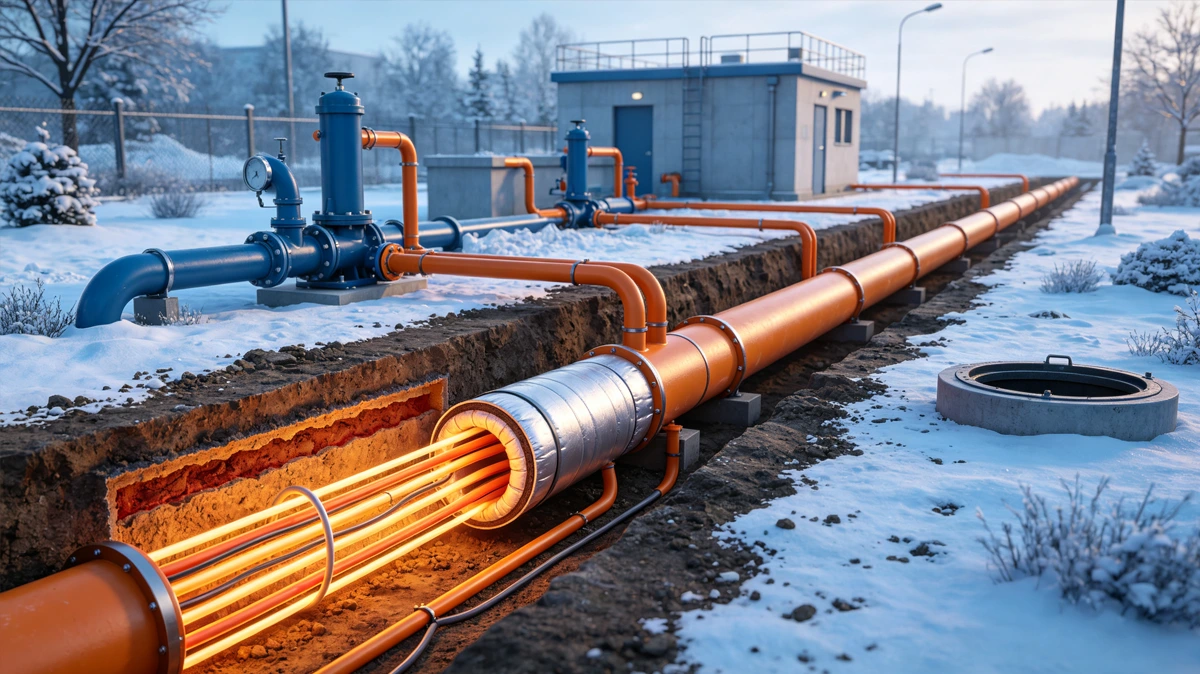
Estimate the heat needed to keep water, fire protection and utility lines above freezing in outdoor or unheated spaces. Explore pipe freeze protection.
Industrial Temperature Maintenance
Review process pipe heat loss before selecting a self-regulating, constant wattage or mineral insulated heating cable for industrial systems.
Roof, Gutter and Snow Melting
Use the heat-loss concept as a starting point for roof deicing and snow melting, then complete a dedicated area and power design.
Important Design Boundary
This pipe heat loss calculator uses a simplified preliminary model for one straight insulated pipe. It is not an ASTM C680 program, manufacturer design software, electrical code approval or final bill of materials.
For a complete design, confirm pipe contents, actual pipe OD and schedule, insulation product, wind and weather exposure, fittings, startup current, maximum circuit length, thermostat or controller, ground-fault protection, connection kits and local requirements.
- Verify UFD, UFM, UFH, UFP, UFC or MI datasheet limits.
- Review junction boxes, splices and end seals.
- Use a qualified electrician and engineer for critical systems.
- Request a project-specific cable schedule when needed.
Pipe heat loss guide
How to Calculate Heat Loss from an Insulated Pipe
Use this page to understand the main heat-loss inputs before moving from an estimate to an engineered heat trace design.
A pipe heat loss calculator estimates how much heat a pipe loses to the surrounding environment. The result depends on pipe outside diameter, heated length, minimum ambient temperature, required maintain temperature, insulation thickness, insulation condition and exposure. For pipe freeze protection, the heating cable must add enough heat to offset the expected loss at the coldest design condition.
Insulation and heating cable perform different jobs. Insulation reduces heat loss, while heat trace cable supplies controlled heat. A reliable design therefore reviews the insulation material, thickness, continuity, moisture protection and mechanical protection together with the cable output and control method.
After calculating preliminary heat loss, compare the design load with the actual product family. Youfu Thermal supplies UFD, UFM and UFH self-regulating heating cables, UFP and UFC constant wattage heating cables, MI mineral insulated heating cable and installation accessories for residential, commercial and industrial applications.
Pipe heat loss can increase around valves, flanges, pumps, supports, branches and instruments. Those items may require additional cable routing, connection boxes, splice kits, end seals and a separate control zone. Treat this calculator as a planning tool and request a project-specific review before ordering.
Frequently asked questions
Pipe Heat Loss Calculator FAQ
These answers describe the preliminary planning purpose of this tool. Always follow the selected product’s installation instructions.
What does a pipe heat loss calculator estimate?
It estimates heat loss per metre or foot, total heat loss for a straight pipe run and a preliminary design load after a selected safety factor. It does not replace a final manufacturer heat-loss calculation.
Why is insulation thickness important for heat trace design?
Insulation reduces heat loss from the pipe. A thicker, continuous and dry insulation system generally reduces the heating load, while wet or damaged insulation can increase heat loss significantly.
Does this calculator include valves and fittings?
It adds a simple equivalent-length allowance for the entered quantity, but valves, flanges, pumps, branches and instruments require field routing and accessory review.
Which Youfu Thermal cable should I use after calculating heat loss?
The choice depends on maintain temperature, exposure temperature, cable output, voltage, controls, circuit length and installation environment. UFD is aimed at lower-temperature freeze protection; UFM and UFH support higher temperature ranges; UFP, UFC and MI serve other defined or demanding applications.
Can I use the result as a final electrical design?
No. Confirm the product datasheet, cable output at the design condition, circuit protection, controller, end seals, connection kits, local electrical code and project-specific engineering requirements.
Need a Project-Specific Pipe Heat Loss Review?
Send your pipe layout, operating temperature, minimum ambient temperature, insulation details and available voltage to the Youfu Thermal team.